


Schengen Visa for Indians
What is a Schengen Visa?
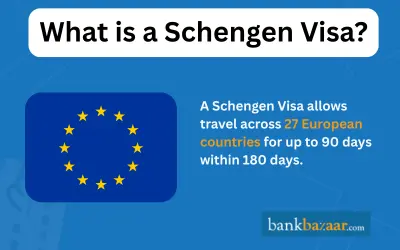
A Schengen Visa allows travel to 29 European countries for up to 90 days within a 180-day period for tourism, business, or family visits. It permits free movement across Schengen Area countries with a single visa.

A Schengen Visa enables a person to travel between or remain in one or more Schengen Member States. The maximum length of stay permitted by the visa under the short-stay program is 90 days, though this can vary depending on the visa type.
India brings in a significant number of tourists to the Schengen regions each year, thus anyone from India who wants to apply for a Schengen Visa has to be aware of the numerous requirements, costs, and other rules.
Schengen Visa Zone
29 member nations or countries of the Schengen Agreement are accessible with a Schengen Visa. There are 29 member nations in the Schengen Area, 25 of which are members of the European Union, while the remaining four are members of the European Free Trade Association (EFTA).
Since the controls are based on predetermined criteria in accordance with the Schengen agreement, the member states do not conduct border checks at their internal borders.
The Schengen Area/Zone is defined by the Schengen Agreement where the members allow free and unrestricted movement of people, goods, services, and capital, based on common rules. The members share common travel and movement rights which helps them in controlling external borders by strengthening the common judicial system and police cooperation.
The Schengen Zone consists of the following members:
Austria | Hungary | Poland |
Belgium | Iceland | Portugal |
Bulgaria | Croatia | Romania |
Czechia | Italy | Slovakia |
Denmark | Latvia | Slovenia |
Estonia | Lithuania | Spain |
Finland | Luxembourg | Sweden |
France | Malta | Switzerland |
Germany | Netherlands | Liechtenstein |
Greece | Norway |
|
Features of the Schengen Zone
The abolition of borders between the members of the Schengen area benefits the citizens and the governments in various ways. Few of the features of the Schengen Zone are listed below -
- Free movement of people across internal borders, no passport checks between member states.
- A common set of rules for crossing external (non-Schengen) borders.
- Shared police and judicial cooperation to combat crime effectively.
- The Schengen Information System (SIS), a shared database for information on individuals, missing persons, and stolen goods.
- The Visa Information System (VIS) collects and exchanges data on short-stay visa applications.
- Temporary border controls may be reinstated for up to 30 days if a member state identifies a serious security threat.
Security System of the Schengen Zone
Strong security procedures have been put in place in the Schengen Area to safeguard the populace against fraud, criminal activity, etc. The Visa Information System (VIS), Schengen Information System (SIS), and European Dactyloscopy (EURODAC) security system enable the members to create and share a database for a variety of purposes.
The members can access information on individuals entering the Schengen Zone, those marked for criminal activity, and individuals barred from entering the Schengen Zone thanks to the database. The following is a list of each system's specifics:
Visa Information System (VIS) - Collects and exchanges information of short-stay visa applications.
- Supports Visa Issuance and Border Check Processes
- Protects Schengen Travelers
- Supports with Asylum Applications
- Improves security measures
Schengen Information System (SIS) - Collects and exchanges information of people who are suspected to be criminals along with data of people who are not allowed to enter/reside in the Schengen Zone. Moreover, it collects information pertaining to stolen/lost assets and missing people
- Allows Collaboration of Border Control and Law Enforcement
- Supports Vehicle Registration Collaboration
- European Dactyloscopy (EURODAC) - A fingerprint database to identify asylum seekers and illegal border-crossers.
- Supports applications of Asylum Seekers
- Supports VISA
- Avoids, identifies, and explores crimes, terrorism, and other threats
Schengen Visa Eligibility Criteria
All Indian citizens and citizens of other nations who are currently residing in India can apply for a Schengen Visa in India. The citizens of the following countries are required to apply for a Schengen Visa in order to visit any of the Schengen member states -
Afghanistan | Côte d'Ivoire | Jamaica | Nepal | Sudan |
Algeria | Cuba | Jordan | Niger | Suriname |
Angola | Democratic Republic of the Congo | Kazakhstan | Nigeria | Swaziland |
Armenia | Djibouti | Kenya | North Korea | Syria |
Azerbaijan | Dominica | Kiribati | Northern Mariana's | Tajikistan |
Bahrain | Dominican Republic | Kuwait | Oman | Tanzania |
Bangladesh | Ecuador | Kyrgyzstan | Pakistan | Thailand |
Belarus | Egypt | Laos | Palau | Timor-Leste |
Belize | Equatorial Guinea | Lebanon | Papua New Guinea | Togo |
Benin | Eritrea | Lesotho | Peru | Tonga |
Bhutan | Ethiopia | Liberia | Philippines | Trinidad and Tobago |
Bolivia | Fiji | Libya | Qatar | Tunisia |
Botswana | Gabon | Madagascar | Russia | Turkey |
Burkina Faso | Gambia | Malawi | Rwanda | Turkmenistan |
Burma/Myanmar | Georgia | Maldives | Samoa | Tuvalu |
Burundi | Ghana | Mali | Sao Tome And Principe | Uganda |
Cambodia | Grenada | Marshall Islands | Saudi Arabia | Ukraine |
Cameroon | Guinea | Mauritania | Senegal | Uzbekistan |
Cape Verde | Guinea-Bissau | Micronesia | Sierra Leone | Vanuatu |
Central African Republic | Guyana | Moldova | Solomon Islands | Vietnam |
Chad | Haiti | Mongolia | Somalia | Yemen |
China | India | Morocco | South Africa | Zambia |
Colombia | Indonesia | Mozambique | Sri Lanka | Zimbabwe |
Comoros | Iran | Namibia | St Lucia | Kosova |
Congo | Iraq | Nauru | St Vincent & The Grenadines |
Nationalities of the following countries require an airport transit visa in order to change the aero plane at an airport in a Schengen Area country during the course of their travel -
Afghanistan, Bangladesh, Congo (DRC), Eritrea, Ethiopia, Ghana, Iran, Iraq, Nigeria, Pakistan, Somalia, Sri Lanka
Application Process for the Schengen Visa
The completed application form along with the required documents need to be submitted by the Embassy/Consulate or its representatives in India.
The application process is mentioned below:
- Determine the Right Visa Type: Identify whether you need a Type A (Airport Transit), Type C (Short-Stay), or Type D (National/Long-Stay) visa based on the purpose and duration of your trip.
- Choose the Correct Embassy or VAC: If visiting a single country, apply at that country's embassy or authorised VAC. If visiting multiple Schengen countries, apply at the embassy of the country where you intend to spend the most days, or your first port of entry if days are equal.
- Gather Your Documents & Buy Travel Insurance: Compile all required documents and purchase a valid Schengen travel insurance policy (minimum €30,000 cover). Have your insurance certificate ready before submitting the application.
- Complete the Online Application Form: Fill in the Schengen Visa Application Form online via the relevant VAC portal (e.g., VFS Global). Print, sign, and date the completed form.
- Book Your VAC Appointment: Schedule your appointment online via the VAC's booking portal. Note that the VFS Global service charge is payable when booking. Appointments in major cities can fill up quickly, so book well in advance.
- Attend the In-Person Appointment: Visit the VAC at your scheduled time. During the appointment, you will submit all documents, have your biometric data (fingerprints) collected, and make payment for the visa fee and any applicable service charges. Biometrics are typically required every 5 years.
- Track Your Application Status: After submission, track your application online using the reference number provided by the VAC. Standard processing takes 15 working days (excluding the day of submission), but can extend to 30 days or more during peak travel periods.
- Collect Your Passport: Once a decision has been made, collect your passport from the VAC, in person or via the optional courier service. Check the visa sticker carefully for accuracy upon collection.
Schengen Visa Fees for Indian Passport Holders
The Schengen Visa fee is a non-refundable mandatory fee which differs based on the type of the visa and the applicant's country. Most embassy/consulates allow multiple payment methods such as cash, debit and credit cards, etc.
Visa Category | Visa Fee in Euro |
Schengen Visa for Adults | 90 |
Schengen Visa for children between 06-12 years of age | 45 |
Schengen Visa for children below six years of age | Waived |
The cost of the visa is based on the going exchange rate. Indian undergraduate, graduate, and postgraduate students traveling for academic training and study are exempt from paying the visa fee. Also, anyone under the age of 25 who are asking for a visa for non-profit participation in conferences, sporting activities, cultural events, or educational events do not have to pay the visa cost.
In addition, Indian researchers who travel to any Schengen Member to do scientific study are exempt from paying the visa charge. To learn more about other visa waiver programs, applicants are urged to visit the websites of specific Schengen states.
Who is Exempt from the Visa Fee?
- Children under 6 years of age.
- Participants aged 25 or under in seminars, conferences, sporting, cultural, or educational events organised by non-profit organisations.
- Indian undergraduate, graduate, and postgraduate students travelling for study or academic training.
- Researchers travelling to a Schengen country for scientific research.
- Close family members of EU/EEA/Swiss nationals (subject to conditions).
Schengen Visa Types
There are various types of Schengen Visas which determine the validity and limitation of the visit. Based on the consulate/embassy of the member which issues the visa, the validity and rules may differ. The Schengen Visa is broadly divided into the following three categories:
- Type A: Airport Transit Visa: For transit through the international zone of a Schengen airport without entering the Schengen Area. Does not permit entry into the country.
- Type C: Tourist / Short-Stay Visa: The most common type. Permits stays of up to 90 days within any 180-day period. Covers tourism, business, family visits, and short cultural trips.
- Type D: National (Long-Stay) Visa: Issued for stays exceeding 90 days — typically for work, study, or family reunification. Issued by the individual Schengen country concerned.
Uniform Schengen Visa (USC) - Entry Schemes
Under Type C category, depending on the number of permitted entries, visas are further divided and are mentioned in the table below:
Entry Type | What it Allows | Validity |
Single-Entry | One entry into the Schengen Area. Visa expires upon exit. | As specified on visa sticker |
Double-Entry | Two entries into the Schengen Area during the validity period. | As specified on visa sticker |
Multiple-Entry | Unlimited entries and exits during the validity period, subject to the 90/180-day rule. | As specified on visa sticker |
Limited Territorial Validity (LTV) Visa
An LTV visa restricts travel to a specific Schengen country or countries only. It is issued in exceptional circumstances — for example, when an applicant holds a travel document not recognised by all member states, or on humanitarian grounds.
Sub-Categories – Based on Purpose
Visa Sub-Type | Purpose | Details |
Tourist Visa | Leisure, sightseeing, visiting friends or family | Max 90 days, work not permitted |
Business Visa | Meetings, conferences, trade fairs | Does not permit taking up employment |
Student Visa | Short academic programmes, language courses | Long-term study requires Type D visa |
Working Visa (Residence Permit) | Employment in a Schengen country | Subject to each country's labour laws |
Transit Visa | Passing through Schengen territory (up to 5 days) | For onward travel to a non-Schengen country |
Documents Required for Tourist Schengen Visa
Along with the filled in application form, the following details/documents are required for the application process:
Core Documents
- Completed and signed Schengen Visa Application Form — available online via VFS Global or the relevant embassy portal.
- Valid passport — must have been issued within the past 10 years, remain valid for at least 3 months beyond your intended return date, and contain at least 2 blank pages. Previous passports with Schengen visas should also be submitted.
- Two recent colour passport-size photographs — taken against a plain light background, with the full face clearly visible. Must comply with Schengen photo guidelines.
- Schengen Travel Insurance Certificate — minimum coverage of €30,000 for medical expenses, hospitalisation, and repatriation (including in the event of death), valid across all Schengen countries for the full duration of your stay.
- Confirmed return flight itinerary — showing entry and exit dates. Note: tickets are not always required before visa approval; a reservation or itinerary is typically sufficient.
- Proof of accommodation — hotel bookings, a letter of invitation from a host, or other confirmed lodging arrangements for every night of your stay.
- Cover letter — briefly stating the purpose of the visit, itinerary, and personal details.
- Proof of sufficient financial means — bank statements for the past six months. A minimum of approximately €45 per day of travel is generally expected.
- Visa fee payment — in cash, demand draft, or via other accepted methods at the VAC.
Additional Documents
Application Type | Documents Required |
Salaried / Employed | Employment contract or appointment letter; latest payslips (3 months); employer's leave approval letter; Income Tax Returns (ITR) for the last 2–3 years; company bank statements. |
Self-Employed / Business Owner | Business registration certificate / trade licence; company bank statements (6 months); ITR for the last 2–3 years; Memorandum and Articles of Association (if applicable). |
Student | Valid student ID; proof of enrolment; no-objection certificate (NOC) from the institution; letter of acceptance (for study visas); parent or guardian's financial documents and sponsorship letter. |
Retired | Pension statements for the past 6 months; proof of retirement; ITR (if applicable). |
Minor (Under 18) | Birth certificate; valid passport; completed and signed application form signed by both parents or legal guardian; notarised parental consent letter (if travelling alone or with only one parent). |
Travel Insurance Requirements for a Schengen Visa
Mandatory Requirements
- The policy must be purchased from an insurance provider recognised by Schengen consular authorities.
- Minimum coverage of 30,000 Euros for medical expenses, including emergency treatment and hospitalisation.
- Coverage must include repatriation costs (including in the event of death).
- The policy must be valid across all Schengen countries for the entire duration of your stay.
Processing Time
- Schengen short-stay visas are typically processed within 15 working days of submission (excluding the day of submission).
- During peak seasons, particularly April through July, processing can extend to 30 days or more.
- In exceptional circumstances, processing may take up to 60 days.
- If you have not received a decision after two weeks, contact the relevant consulate or VAC directly
Documents Required for Business Schengen Visa
Along with the filled in application form, the following details/documents are required for the application process -
- One passport format photograph with a light background where the complete face is captured.
- A valid passport with three months of validity from the departure date. The passport must have at least two blank pages.
- Copy of the confirmed airline ticket for the return journey.
- Travel visa insurance policy which is valid in all Schengen countries. In the event of visa application rejection, the applicant can claim for a refund after cancelling it.
- Proof of accommodation.
- Latest bank statement for the past six months.
- Official affidavit of support is applicable for applicants who will require financial support for their visit.
- Details of the travel plan.
- First-time travelers need to submit additional documents.
- Invitation letter, if applicable.
- A brief profile of the applicant's working place(company/organization)
- Memorandum and Article of Association in original certified copy/trade license/proprietorship or partnership documents.
- Proof of Accommodation and other documents based on the consulate/embassy.
Business Visa Validity - The length of the applicant's stay between periods of six months may not exceed three months, or 90 days each year, depending on the nature of the applicant's request and the nature of the business. The visa application must be submitted at the specific consulate or embassy in India, depending on which Schengen nation the applicant will enter first and stay in for the greatest number of days during the visit. It is recommended that applicants apply for the Business Schengen Visa at least two weeks before the scheduled departure date.
Student Schengen Visa - The applicant must submit an application for a Student Schengen Visa if they are a student who want to study in one of the Schengen nations. Students from nations where entry into the Schengen region requires a visa must follow the application procedures laid out by the specific consulate or embassy of that nation.
Documents Required for Student Schengen Visa
Along with the filled in application form, the following details/documents are required for the application process-
- Valid travel documents such as passport with at least three months of validity from the travel date.
- Proof of means of subsistence in either cash, traveler's cheque, credit card or any other means to support the entire duration of the stay.
- Proof of accommodation
- Details of the travel itinerary.
- Medical/travel insurance valid for the entire stay.
- Letter of acceptance from the university where the student intends to study.
- Receipt of processing fee payment and other details as specified by the particular consulate/embassy.
Student Visa Validity - If the duration of the study exceeds 90 days period in order to complete the whole academic period, the applicant/student must also apply for a residency permit which will allow him/her to reside for a one-year period. Based on the Schengen country the student is visiting, he/she will be required to apply for the visa in that particular embassy/consulate in India. Applicants are advised to apply for a Student Schengen Visa at least three months prior to the planned travel date.
Working (Employment) Schengen Visa - Residence Permit - This type of visa allows the citizens from the non-Schengen countries to work in a Schengen country with the help of the Residence Permit. The applicant may reside alone or with his family in the specified Schengen country during the course of his/her employment. The citizens of Australia, Canada, USA, Israel, Japan, New Zealand, Switzerland, and many other European countries can apply for their Residence Permit after entering the Schengen zone without a visa.
Documents Required for Working (Employment) Schengen Visa
Along with the filled in application form, the following details/documents are required for the application process-
- One passport format photograph with a light background where the complete face is captured.
- A valid passport with three months of validity from the departure date. The passport must have at least two blank pages.
- Copy of the confirmed airline ticket for the return journey.
- Travel visa insurance policy which is valid in all Schengen countries. In the event of visa application rejection, the applicant can claim for a refund after cancelling it.
- Proof of accommodation.
- A valid employment contract and other documents as specified by the particular Schengen country.
Working (Employment) Schengen Visa Validity - The applicants are advised to apply for a Working (Employment) Schengen Visa at least two months prior to the planned travel date. The visa issued on a long-term scheme which entitles the visa holder to all other benefits in the Schengen Zone as it applies to any other citizen of the Schengen Zone.
Transit Schengen Visa - In order to switch planes within the Schengen Zone, nationals of some nations must get a Transit Schengen Visa. Travelers who are changing planes while traveling from one non-Schengen nation to another non-Schengen country but are not entering the Schengen area are eligible for this sort of visa. The short-term visa category includes this kind of visa.
Ask Questions about Schengen Visa
Related Topic About Schengen Visa
FAQs on Schengen Visa for Indians
1.Who needs a Schengen Visa?
The citizens of certain countries are required to obtain the Schengen Visa in order to enter any of the country listed under the Schengen Zone.
2.When should I apply for my Schengen Visa?
Based on the category, the applicant will be required to apply for a Schengen Visa few days/weeks prior to the planned travel date.
3.Is it possible to apply for a Schengen Visa in a country where the applicant is not a resident?
Yes, as long as the applicant is able to explain the reason for doing so, the application will be permissible.
4.Is it possible to extend the Schengen Visa beyond the specified days?
Yes, it is possible to extend the duration of Schengen Visa, however, it cannot exceed the specified 90 days period. The applicant will be required to apply for the visa again from the country of his/her residence.
5.Can I travel within the Schengen area with the residency permit?
Yes, the residency permit allows the individual to freely travel throughout the Schengen Zone without the need of any additional documents.
6.Is it possible to travel to more than one Schengen country with the same visa?
Yes, the visa holder is allowed to travel to more than one Schengen country with the same visa unless issued under the Limited Territorial Validity Visas (LTV) category.
7.What's the validity of the Schengen Visa?
Depending on the type of the visa, the validity may differ, however, visa holders can visit the Schengen Zone for a maximum of 90 days under the common type of visa issued by Schengen consulates/embassies.
8.What is the difference between Transit visa and Airport transit visa?
The Transit visa allows the holder to transit within the Schengen Zone through car, coach, plane, etc. for a maximum of five days to a non-Schengen country. The Airport Transit Visa allows the holders to transit through the International Airport of a Schengen country without entering the Schengen Territory when they are changing a flight during their course of travel from a non-Schengen country to another non-Schengen country.
9.How is single-entry visa different from a multiple-entry visa?
With a single-entry visa, the visa holder can enter the Schengen Area only once and the visa expires when the person leaves the Schengen Zone, however, the multiple-entry visa allows the visa holder to enter and exit the Schengen Zone multiple times as long as the visa is valid.
10.At what stage of the visa application process should I buy the airline tickets?
Applicants are advised to not to book the airline tickets or hotel rooms till the visa is approved.
11.What is the minimum fund requirement to apply for a Schengen Visa?
Depending on the days of the trip and estimated expenses, the applicant is expected to have sufficient means to support the expenses during the travel.
12.Is it possible to obtain a Schengen Visa for a minor?
Yes, the visa application will need to be signed by both parents/guardians/ or the parent who has the custody of the child.
13.Is the visa fee refundable?
No, the Schengen visa fee is a non-refundable.
14.How can I make the payment for the Schengen Visa fee?
The fee can be paid at designated consulate/embassy through cash, debit or credit card.
15.Who can apply for a Schengen Visa in India?
All Indian citizens and citizens of other nations who are currently residing in India can apply for a Schengen Visa in India.
16.What are the documents that need to be carried while travelling to a Schengen country?
While travelling to a Schengen country, the individuals must carry the valid passport, visa, and all other documents to as specified under the particular visa type.

Disclaimer
Credit Card:
Credit Score:
Personal Loan:
Home Loan:
Fixed Deposit:


Copyright © 2026 BankBazaar.com.