


NPCI FASTag
NPCI FASTag is the National Electronic Toll Collection (NETC) programme of the National Payments Corporation of India (NPCI) that lets you pay tolls at plazas across India through an RFID tag on your windscreen. The toll is debited automatically from the linked prepaid, savings or current account, so you do not have to stop and pay in cash.
The programme offers a nationwide toll payment system including clearing house services for settlement and dispute management. The National Electronic Toll Collection (NETC) system permits a customer to use their FASTag as a form of payment at any toll plaza, regardless of who owns the toll plaza.
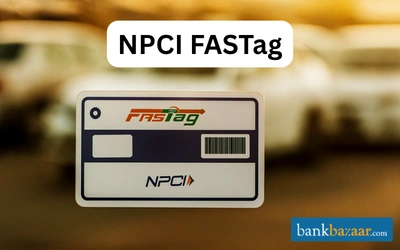
FASTag is a machinery which uses Radio Frequency Identification (RFID) technology to pay the toll amount at plazas. Here the amount is debited directly from your FASTag account which means you do not have to fish for change at plazas and waste any time when it comes to payment of toll amount at plazas in India.
A customer can pay tolls directly from the account that is linked to FASTag by attaching a FASTag (RFID Tag) to their vehicle's windscreen.
NETC System Objectives
The objectives of NETC are given below:
Aim at creation of an ecosystem which is interoperable |
|
To provide a framework which is robust and simple |
|
To be of service to the Government of India and help them meet their goals |
|
| |
| |
| |
|
Features of NETC Collection System
Given below are the features and benefits of the NETC collection system:
Type of transactions | Off-line; near real time transaction processing as the toll plazas send the transactions within 10 mins interval. |
Interoperability | A tag issued by any member bank is accepted at every toll plaza (under the NETC programme) acquired by any member bank in a safe and secure manner because the NETC ecosystem supports multiple issuers and multiple acquirers. |
Freedom to select the underlying payment methods | Customers can link their FASTag to a prepaid account or their current or savings account using the services provided by Issuer member banks. It is not mandatory for the customer to have an existing relationship with the bank issuing FASTag |
Issuance of tag | Member banks with NETC Program authorization may issue FASTag |
Payment in a cashless manner | While the car is moving, FASTag enables electronic payments at the toll booth |
Saving of fuel and time | FASTag allows customers to travel without stopping at toll booths, reducing congestion in places, saving fuel and shortening travel times |
Online recharge of FASTag | Through the websites of the issuing member banks, customers can top off their FASTag accounts online by using UPI, Credit Cards, Debit Cards, NEFT, RTGS, and Net Banking |
Vehicle-specific tag | A FASTag is issued against the registration of one vehicle and cannot be transferred to another vehicle. |
Recharge to keep the tag active | If the balance in the linked prepaid account is insufficient, the FASTag is blacklisted, so keep it recharged to continue using the FASTag lane. |
Higher fee for vehicles without a valid FASTag | A vehicle that enters a fee plaza without a valid, functional FASTag pays twice the applicable user fee in cash or 1.25 times the applicable user fee through UPI, under the National Highways fee rules effective from 15 November 2025. |
FASTag Annual Pass | Non-commercial vehicles with a valid FASTag can buy the FASTag Annual Pass, which is valid for one year or 200 fee plaza crossings, whichever comes first. The pass fee for FY 2026-27 is Rs.3,075. |
List of Banks providing FASTag services
Given below is the list of banks in India that provide FASTag services:
Member Banks | Issuer |
Airtel Payments Bank | Yes |
AU Small Finance Bank | Yes |
Axis Bank Ltd | Yes |
Bank of Baroda | Yes |
Bank of Maharashtra | Yes |
Canara Bank | Yes |
Central Bank of India | Yes |
City Union Bank Ltd | Yes |
Cosmos Bank | Yes |
Dombivli Nagari Sahakari Bank | Yes |
Equitas Small Finance Bank | Yes |
Federal Bank | Yes |
FINO Payments Bank | Yes |
HDFC Bank | Yes |
ICICI Bank | Yes |
IDBI Bank | Yes |
IDFC First Bank | Yes |
Indian Bank | Yes |
Indian Overseas Bank | Yes |
IndusInd Bank Ltd. | Yes |
Jammu and Kashmir Bank | Yes |
Karnataka Bank | Yes |
Karur Vysya Bank | Yes |
Kotak Mahindra Bank | Yes |
Nagpur Nagarik Sahakari Bank | Yes |
Punjab National Bank | Yes |
Saraswat Bank | Yes |
South Indian Bank | Yes |
State Bank of India | Yes |
The Jalgaon People Co-op Bank | Yes |
Thrissur District Cooperative Bank (Kerala Bank) | Yes |
UCO Bank | Yes |
Union Bank of India | Yes |
Yes Bank Ltd | Yes |
LivQuik/QuikWallet | Yes |
TZF Logistics | Yes |
Eroute Technologies (OmniCard) | Yes |
Bajaj Finance Ltd. | Yes |
How to Check NETC FASTag status
Given below are the steps to check your NETC FASTag status:
- Visit the NETC FASTag Status page and select either ‘Vehicle Registration Number (VRN)’ or ‘NETC FASTag ID’.
- Enter the relevant detail for the option selected.
- Enter the captcha code and click on ‘Check Status’. You will be able to view the status of your FASTag.
If a toll plaza does not accept or cannot read your FASTag, or your tag is wrongly shown as blacklisted, you can raise the issue on the NHAI toll-free FASTag helpline, 1033.
Summary
NPCI FASTag is the NETC programme that lets you pay tolls electronically across India through a windscreen RFID tag linked to a prepaid, savings or current account. A tag from any member bank works at any participating plaza, and you can recharge it online and check your NETC FASTag status on the NPCI status page. Keep your tag recharged, use the FASTag lane and apply through an issuer bank listed above to start using NPCI FASTag.
FAQs on NPCI FASTag
1.What is NPCI FASTag?
NPCI FASTag is an RFID tag fixed on your vehicle's windscreen that pays tolls under the National Electronic Toll Collection (NETC) programme of the National Payments Corporation of India. The toll is debited automatically from the account linked to your NPCI FASTag, so you do not have to stop and pay in cash.
2.What are the objectives of the NETC programme behind NPCI FASTag?
The NETC programme aims to create an interoperable, secure, simple and transparent toll payment ecosystem that supports the government's e-payment goals. It also seeks to reduce congestion, air pollution, fuel use and cash handling at toll plazas.
3.How does NPCI FASTag work at a toll plaza?
NPCI FASTag works through RFID technology, which reads the tag on your windscreen as the vehicle moves through the toll lane. The toll is then debited from the linked account, and the plaza sends the transaction to the NETC system at short intervals.
4.Can an NPCI FASTag issued by one bank be used at any toll plaza?
Yes, a tag issued by any NETC member bank is accepted at every toll plaza under the NETC programme, whichever bank acquired that plaza. This is because the NETC ecosystem supports multiple issuers and multiple acquirers.
5.Which accounts can I link to my NPCI FASTag?
You can link your NPCI FASTag to a prepaid account or to a current or savings account through the issuer bank. You do not need an existing relationship with the issuing bank to get an NPCI FASTag.
6.How can I recharge my NPCI FASTag online?
You can recharge your NPCI FASTag online through the website of the issuing bank. The options include UPI, credit cards, debit cards, NEFT, RTGS and net banking.
7.What is the difference between an issuer and an acquirer in the NETC FASTag bank list?
An issuer bank provides the FASTag to customers, while an acquirer bank manages the toll plaza that collects the toll. The bank table above shows whether each NETC member bank acts as an issuer, an acquirer or both.
8.How can I check my NETC FASTag status?
You can check your NETC FASTag status on the NPCI status page by selecting either your Vehicle Registration Number or your NETC FASTag ID. Enter the detail, fill in the captcha code and click on Check Status to view the status.
9.What documents are needed to apply for an NPCI FASTag?
You need to submit a signed FASTag application form to the issuer bank, along with a passport-size photograph of the vehicle owner and the KYC documents required for the owner's category. A current driving licence is among the documents the issuer asks for.
10.What is the validity of an NPCI FASTag?
An NPCI FASTag has a validity of five years from purchase. After buying it, you only need to recharge or top it up as required.
11.Which roads allow the use of NPCI FASTag?
NPCI FASTag can be used at toll plazas on National Highways and at other toll plazas that take part in the NETC programme. Because the system is interoperable, the same NPCI FASTag works at all participating toll plazas.
12.What is the government rule on dedicated lanes for NPCI FASTag and non-FASTag vehicles?
Toll plazas on National Highways have dedicated FASTag lanes for NPCI FASTag users, and a vehicle without a valid, functional FASTag pays a higher user fee than a FASTag user. The current fee multiples for cash and UPI are listed in the features section above.
13.What should I do if my NPCI FASTag does not work at a toll plaza?
You can pay the toll through another payment method at the plaza. You can also file a complaint on the NHAI toll-free helpline mentioned above, and contact your issuer bank if the tag is wrongly blacklisted.
14.What should I do with my NPCI FASTag if I sell or transfer my vehicle?
You must notify your issuing bank and close the NPCI FASTag account when you sell or transfer your vehicle. An NPCI FASTag is linked to one vehicle and cannot be moved to another.
15.Why do banks collect a security deposit for an NPCI FASTag?
Banks collect a security deposit against the tag issued to you. If you default on payment, the bank can adjust the amount from the security deposit, and the deposit amount varies by issuer and vehicle class.

Disclaimer
Credit Card:
Credit Score:
Personal Loan:
Home Loan:
Fixed Deposit:


Copyright © 2026 BankBazaar.com.