


SVEEP - Systematic Voter Education and Electoral Participation
The Election Commission of India launched the Systematic Voters’ Education and Electoral Participation (SVEEP) program in 2009. This is a flagship initiative to promote voter education, awareness, and literacy.

What is SVEEP?
SVEEP program is the Election Commission of India’s flagship initiative for promoting voter education, awareness, and literacy. SVEEP aims to empower citizens with essential knowledge about the electoral process and encourage informed, inclusive participation in elections. Through a mix of general and targeted interventions tailored to each state’s socio-economic, cultural, and demographic context, as well as past voting patterns, the program strives to strengthen India’s democracy by motivating every eligible voter to make an informed choice.
What are the Objectives of SVEEP?
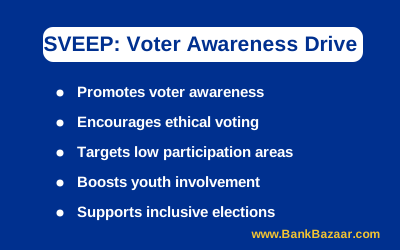
- Increase Voter Turnout: Achieve higher participation rates by following the IMF-EEE (Information, Motivation, Facilitation – Ethics, Efficiency, Engagement) framework.
- Revive Low-Turnout Areas: Improves voter participation in constituencies and polling stations with historically low turnout.
- Promote Inclusion: Through targeted outreach and technological solutions, this initiative ensures participation of non-voters and marginalised groups.
- Bridge the Gender Gap: Work towards Ensures equal voter enrolment and turnout among men and women.
- Engage Urban and Youth Voters: To boost electoral involvement, address voter apathy among urban populations and young citizens.
- Encourage Informed and Ethical Voting: Promote continuous electoral and democracy education to improve the quality of participation.
Management Structure of SVEEP
SVEEP has grown over the last six years since it was first established and has played a huge role in increasing the voter registration over the years. The programme follows a systematic management structure in order to contribute to the democracy of the country.
Level | Appointed Office | Purpose |
National Level | Electoral Commission of India (ECI) | Formulates policiesLays down the frameworkPlans interventionsMonitors implementation |
State Level | State CEO’s office | A State Nodal SVEEP Officer oversees the program.While a State SVEEP Core Committeeisestablishedto steer and coordinate its execution.Note: The committee consist of representatives from key stakeholder groups |
District Level | District Election Officer (DEO) | The District Election Officer (DEO) leads the implementation of the SVEEP program.This initiative is supported by the District SVEEP Nodal Officer and a District SVEEP Core Committee to ensure effective execution. |
Booth Level | Booth Level Officer (BLO) | ChunavPathshalasisestablishedat the booth level.Along with the Booth Level Officer (BLO) serving as the Nodal Officer, they implement SVEEP activities effectively. |
How Does SVEEP Works?
Listed below are the different processes and the different components under them.
Situation and Gap Analysis
Surveys to identify gaps and target areas for improvement by conducting assessments using indicators, such as:
- Elector-Population Ratio
- Age Cohort data
- Gender Ratio
- KAP (Knowledge, Attitude, and Practice)
Planning & Preparation
- Develop a detailed calendar of activities
- Create national, state, and district SVEEP action plans
- Form SVEEP Core Committees
- Appoint and train Nodal Officers
- Design creative content for voter awareness
Partnerships & Collaborations
- Engage with government departments
- Educational institutions
- Youth organizations
- Media houses
- CSOs
- NGOs
- Corporate entities
- PSUs, associations and federations
- National or state icons
- Volunteers and community groups.
Implementation
Execute initiatives under the IMF-EEE framework through:
- Interpersonal communication
- Mass mobilization
- Inclusive and targeted interventions
- Innovative outreach methods
Monitoring & Evaluation:
Track progress through regular documentation and recognize outstanding performance with National Awards presented on National Voters’ Day to officials and partner organizations.
Flagship Programme
National Voter's Day
The Election Commission of India initiated the practise of celebrating National Voters' Day in 2011. The National Voters' Day, which is celebrated on the 25th of January, is considered to be one of the best initiatives of SVEEP. The day has been celebrated since 2011 in an initiative to increase the enrolment of voters in the country.
Electoral Literacy Clubs (ELCs)
- To promote electoral education through a “learn as you do” approach, these clubs are established in schools, colleges, communities, and offices nationwide.
- In schools, ELCs engage future voters (Classes IX–XII).
- In colleges, they target new voters among the youth.
- Chunav Pathshalas focuses on out-of-school students and local communities.
- While Voter Awareness Forums (VAFs) operate in government, private offices, and corporate settings.
- All activities are supported by specially developed Resource Guides tailored for each group.
Voter Facilitation
SVEEP has taken several measures to ensure the facilitation of voters. Listed below are some of the measures taken by the committee to facilitate every process of voting.
Facilitation for Registration
- Availability of Forms: For newly eligible voters, forms 6, 7, and 8 are provided at banks, post offices, colleges, universities, and high schools.
- Online Registration: Enable voter registration through the NVSP portal and Voter Helpline App.
- Website Access: Provide online registration links on ECI, CEO, DEO, college, and university websites.
- Name Search Facility: Allow voters to check their names on the CEO and ECI websites.
- SMS Services: Voter names and polling booth information can be checked via SMS-based search.
- Information Access: Provide details on election laws, guidelines, and election officials (ROs, AROs, BLOs) on the CEO’s website.
- Voter Facilitation Centres: Establish one-stop centers to assist citizens with all voter-related services.
Facilitation for Voter Turnout
- Polling Day Reminders: To remind voters, SMS alerts are sent and use radio, television, and public address systems.
- Voter Helpline: Provide assistance through the 1950 helpline number.
- Voter Slip Verification: To ensure all voters received their slips, sample checks are conducted via 1950.
- Model Polling Stations: To make voting a convenient and pleasant experience, set up stations with additional facilities.
- Alternative ID Options: Share a list of alternative photo identity documents that can be used in place of EPIC on polling day.
- Voter List Search: Enable voters to check their names on the national and CEO websites, as well as through SMS alerts.
- Women voters facilitations: At polling stations, separate queues, toilet arrangements, crèches & volunteers arranged.
Welcoming New Voters
- Inspire participation through welcome kits.
- Introductory materials for first-time voters.
Creative Competitions
To engage communities, conduct:
- Poster
- Song
- Slogan writing
- Short story
- Video
- Local or folk art contests.
Sports Events & Tournaments
To attract voter attention, organises:
- Cricket
- Wrestling
- Marathons, and similar activities
Entertainment Shows
To promote electoral awareness, they organises:
- Street plays
- Magic shows
- Other performances
School & College Dialogues
To educate young voters, hosts:
- Debates
- Discussions
- Interactive sessions
Engagement with Icons
To motivate citizens to vote, leverage national, state, district, and booth-level personalities
Direct Outreach
Facilitate one-on-one contact through Booth Level Officers (BLOs) and grassroots functionaries.
Mass Mobilization Events:
- Conduct rallies
- Human chains
- Candlelight vigils
- Other large-scale awareness activities
Voter Resources
To inform and encourage participation, distribute Voter Guides and creative, motivational content.
FAQs on SVEEP
1.What is SVEEP?
SVEEP is an initiative by the Election Commission of India to educate voters and promote higher participation in elections.
2.What is the full form of SVEEP?
SVEEP stands for Systematic Voters’ Education and Electoral Participation.
3.What is the main goal of SVEEP?
Its main goal is to create awareness among voters and ensure informed, ethical, and inclusive participation in elections.
4.Who implements the SVEEP program?
The Election Commission of India, along with state Chief Electoral Officers and district officials, runs SVEEP campaigns.
5.What are the key activities under SVEEP?
SVEEP conducts awareness drives, workshops, rallies, media campaigns, and school programs to motivate voters.
6.How does SVEEP help increase voter turnout?
It educates and motivates citizens, especially first-time voters, women, and youth, to actively participate in elections.
7.When is National Voters’ Day celebrated under SVEEP?
National Voters’ Day is celebrated every year on 25th January to promote the importance of voting.
8.How can I participate in SVEEP activities?
You can volunteer through your local election office or join awareness programs organized under SVEEP.
9.Does SVEEP use social media for voter awareness?
Yes, SVEEP runs digital campaigns on social media and through the Voter Helpline App to reach young voters.

Disclaimer
Credit Card:
Credit Score:
Personal Loan:
Home Loan:
Fixed Deposit:


Copyright © 2026 BankBazaar.com.