


Role of Recurring Deposits in Building an Emergency Fund
Recurring Deposits are reliable, predictable, and disciplined - making them a smart option for building an emergency fund. You don’t need to deposit a huge lump sum — just set a monthly amount, stay consistent, and you’ll be financially prepared when life throws the unexpected at you.

Why Emergency Funds Are Crucial
Life is unpredictable — medical bills, job loss, or urgent repairs can strike anytime. That’s where an emergency fund steps in. A well-planned emergency fund helps you stay financially stable without relying on high-interest loans or credit cards.
And one of the most reliable ways to build that fund? Recurring Deposits (RDs) — a disciplined, low-risk savings tool with guaranteed returns.
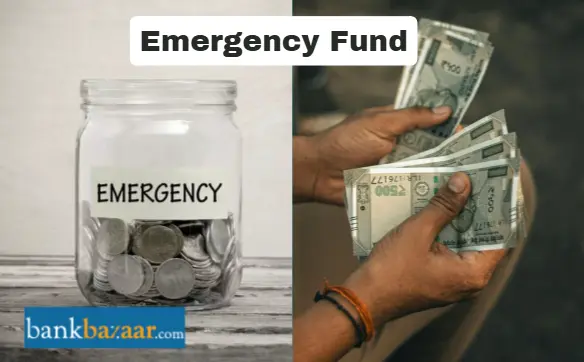
What is a Recurring Deposit (RD)?
A Recurring Deposit is a fixed monthly savings plan offered by banks and post offices. You deposit a specific amount each month, and the bank pays interest, usually compounded quarterly. At the end of the tenure, you get your total savings plus interest — a predictable and risk-free way to grow your money.
Why Use RDs for Emergency Funds?
Feature | Benefit for Emergency Fund |
Fixed Monthly Savings | Builds financial discipline |
Guaranteed Returns | No market risk; predictable growth |
Flexible Tenure | Choose based on your goal (6–60 months) |
Safe Investment | Capital is protected |
Withdraw Anytime (with penalty) | Accessible in emergencies |
RDs are ideal for conservative savers looking to accumulate a financial cushion gradually.
How Much Should You Save in an Emergency Fund?
Experts recommend saving 3 to 6 months of essential expenses. Let’s say your monthly expenses are ₹30,000:
- Minimum emergency fund needed: ₹90,000 – ₹1,80,000
- You can build this by saving ₹5,000–₹10,000 monthly in an RD for 12–24 months.
Example: Building an Emergency Fund Using RD
Let’s assume:
- Monthly RD deposit = ₹5,000
- Interest rate = 7% p.a. (compounded quarterly)
- Tenure = 2 years
At maturity:
- Total deposit: ₹1,20,000
- Maturity amount: Approx. ₹1,26,000
- Interest earned: ₹6,000
This fund can now cover unexpected hospital bills, repairs, or a temporary income gap.
RD vs Other Emergency Fund Options
Let’s compare how RDs stack up against other common savings vehicles for emergency funds:
Option | Safety | Return | Liquidity | Discipline | Suitability for Emergency Fund |
Recurring Deposit | High | Fixed (5–7%) | Moderate (premature withdrawal allowed) | Strong | Excellent |
Savings Account | High | Low (2–4%) | High | Low | Good for instant access |
Fixed Deposit (FD) | High | Moderate | Moderate (penalties apply) | One-time deposit | Good if lump sum available |
Liquid Mutual Funds | Market-linked | Moderate to High | High | Market risk | Depends on risk tolerance |
Cash at Hand | Instant | No returns | High | Risk of overspending | Not ideal for growth |
Conclusion: RDs are the ideal balance of safety, returns, and disciplined saving for planned emergency funds.
Emergency Fund Building Timeline with RD
Goal | Recommended Monthly RD | Tenure | Total Saved |
₹50,000 Emergency Fund | ₹2,100 | 24 months | ₹50,400 + interest |
₹1,00,000 Emergency Fund | ₹4,200 | 24 months | ₹1,00,800 + interest |
₹2,00,000 Emergency Fund | ₹5,600 | 36 months | ₹2,01,600 + interest |
This approach allows gradual, goal-oriented saving based on your income and risk comfort.
Who Should Use RDs for Emergency Funds?
RDs are especially useful for:
- Salaried professionals with fixed monthly income
- Freelancers or gig workers aiming to create a safety net
- Students/young earners saving from limited earnings
- Senior citizens looking for safe and fixed returns
- Small business owners wanting to protect against slow periods
If you struggle to save large amounts, RD offers a manageable, monthly route to security.
Common Mistakes to Avoid
- Skipping monthly payments
- Using the fund for non-emergency spending
- Underestimating your required emergency fund size
- Relying only on savings accounts (which earn lower interest)
What Happens If You Withdraw RD Early?
While RDs are meant to be held till maturity, you can withdraw early if needed.
Important points:
- Premature withdrawal attracts a lower interest rate
- Some banks may charge a nominal penalty
- Still, your principal is safe — making it suitable for emergencies
Action Checklist: Start Your Emergency Fund with RD Today
Step 1: Calculate your monthly essential expenses
Step 2: Set your emergency fund target (3–6x monthly expenses)
Step 3: Open a dedicated RD with a suitable bank or post office
Step 4: Automate monthly deposits
Step 5: Track your progress quarterly
Step 6: Use only in case of genuine emergencies
Safety & Liquidity: Two Key Emergency Fund Pillars
An emergency fund must be:
- Safe: No risk of losing capital → RDs offer full capital protection
- Accessible: You may need the money at any time → RDs allow premature withdrawals (with a small penalty)
Step-by-Step: How to Use RD to Build an Emergency Fund
- Calculate your monthly essential expenses
- Decide a target emergency fund size (e.g., ₹1,50,000)
- Choose an RD tenure (e.g., 18–24 months)
- Set a monthly contribution
- Automate payments through standing instructions
- Avoid breaking the RD unless it’s a true emergency
Best Practices to Maximize RD Benefits
- Open a separate RD only for emergency savings
- Do not mix it with other goals like travel or gadgets
- Opt for longer tenure to get higher compounding benefit
- Check interest rates across banks before opening an RD
- Reinvest or ladder your RDs once matured to keep the fund growing


FAQs on Emergency Fund with Recurring Deposit
- Is recurring deposit good for emergency fund?
Yes, RDs are ideal because they offer disciplined savings, guaranteed returns, and capital safety — all essential for emergency funds.
- How much should I save monthly in an RD for emergencies?
It depends on your expenses. Aim to save enough to cover at least 3–6 months of essential spending.
- Can I withdraw from an RD before maturity during an emergency?
Yes, you can withdraw prematurely, though there may be a small penalty or reduced interest rate.
- Is RD better than a savings account for emergency funds?
RDs offer higher interest rates and encourage saving discipline, making them better for building an emergency fund over time.
- How long should the RD tenure be for emergency savings?
A 12–24 month RD is typically ideal for building an emergency corpus gradually.
- Is a Recurring Deposit safer than mutual funds for emergency savings?
Yes. RDs are not market-linked and offer guaranteed returns with capital protection, whereas mutual funds are subject to market risk and volatility.
- Should I keep my entire emergency fund in an RD?
Ideally, you can keep part of your emergency fund in a savings account for instant access and the remaining in an RD for better returns and disciplined savings.
- Can I open multiple RDs for different emergency goals?
Yes. Many people open multiple RDs with staggered maturities (laddering strategy) to maintain liquidity while earning steady returns.
- Is RD suitable for short-term emergency planning?
Yes. You can choose shorter tenures like 6–12 months if you want to build a quick emergency cushion.
- Is RD better than Fixed Deposit for building an emergency fund?
If you do not have a lump sum to invest, RD is better because it allows small monthly contributions. FDs are more suitable when you already have a large amount available.
- How soon should I start building an emergency fund?
Immediately. Financial experts recommend prioritizing an emergency fund before investing in higher-risk instruments.

Disclaimer
Credit Card:
Credit Score:
Personal Loan:
Home Loan:
Fixed Deposit:


Copyright © 2026 BankBazaar.com.