


Gold Loan LTV Ratio
What is LTV Ratio in Gold Loans
The Loan-to-Value (LTV) ratio in gold loan stands for the percentage of gold market value at present which the lender is ready to offer as loan. When you apply for a gold loan, the value of your gold jewellery or gold in any other form is evaluated by the lender, to determine how much loan can be offered against it. The loan amount offered by the lender is decided based on the LTV factor.
At present, the Reserve Bank of India (RBI) has set a limit of 75% LTV for gold loan for all the banks and NBFCs. This means that for gold valued at Rs. 1 lakh, the maximum applicable LTV would be 75%. In this case, you will get a loan of up to Rs.75,000. This capping helps to protect the lenders from losses in case of non-repayment of loans.
How is LTV Ratio in Gold Loans calculated?
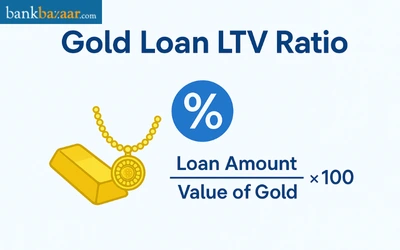
Formula
LTV Ratio = Amount of Loan ÷ Value of Gold x 100
Follow the steps given below to calculate the LTV:
Step 1: You need to determine your gold jewellery’s market value.
Step 2: You need to check the amount of loan you require.
Step 3: Divide the loan amount with the gold’s current value and multiply it by 100.
Step 4: The final answer will be your LTV.
Factors Affecting LTV Ratio in Gold Loans
Some of the factors affecting LTV are as given below:
- RBI Regulations: Currently, the RBI has capped LTV at 75% for gold loans. So, you cannot get a loan of more than 75% of your jewellery’s current market value.
- Purity of Gold: If your gold has a purity of 24k, it will have more value than gold with 22k or 18k purity. You can get a higher amount of loan with pure gold.
- Current Gold Price: The cost of gold keeps fluctuating. The lender checks this value on a daily basis, and it has a direct impact on your LTV. The higher the gold’s current market value, the higher the amount of loan you can borrow.
- Type of Gold: If you are submitting gold jewellery with stones to borrow a loan, do note that the weight of stone will not be considered during valuation. Only gold content will be taken into account when calculating LTV.


FAQs on LTV Ratio in Gold Loans
1.How much is the current LTV in India?
At present, the maximum allowed LTV in India for gold loans is 75% as per the RBI guidelines.
2.Will LTV vary between banks and NBFCs?
Yes, the LTV will vary between banks and NBFCs depending on their internal policies.
3.What are the consequences of not repaying the gold loan?
You may receive a notice from the lender and may also be charged with a penalty fee in case of non-repayment of a gold loan. If you still fail to repay your loan, your pledged assets will be set up for auction to recover the loan amount.
4.Can RBI change the LTV limit?
Yes, the RBI has the power to revise the LTV limit at any given point of time.
5.Does LTV affect the approval of my gold loan?
Yes, if you have requested a loan amount that exceeds the allowed LTV, your loan may be reduced or rejected.

Disclaimer
Credit Card:
Credit Score:
Personal Loan:
Home Loan:
Fixed Deposit:


Copyright © 2026 BankBazaar.com.