


Surgical Steel vs Sterling Silver
Silver rates today affect sterling silver's cost, while surgical steel pricing stays independent of precious metal markets.
Surgical Steel vs Sterling Silver
Surgical steel and sterling silver are two of the most popular metals for jewelry, but they suit very different needs. Surgical steel is prized for its strength, low cost, and resistance to corrosion, while sterling silver is valued for its shine and use in fine jewelry. Choosing between them depends on your skin sensitivity, budget, and how much upkeep you're willing to do.

What Is Surgical Steel?
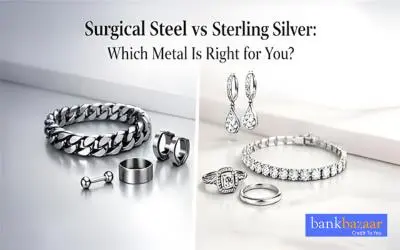
Surgical steel is a form of stainless steel — most commonly grade 316L — made of iron, chromium, nickel, and small amounts of molybdenum. Chromium forms a protective oxide layer that resists rust and corrosion, while molybdenum improves resistance to pitting, especially from sweat and moisture. Because of its biocompatibility, it's widely used in orthopedic and dental implants, as well as body piercings and everyday jewelry.
Also, Check - Silver Rate
Features of Surgical Steel
Given below are some of the features of surgical steel:
Features | Details |
Durability | Very hard (Mohs 6.0–7.5); resists scratches, dents, and everyday wear |
Allergy Risk | Low, but not zero — it contains a small amount of nickel, so highly nickel-sensitive skin may still react |
Cost | Budget-friendly; no precious-metal content |
Maintenance | Minimal — wipe clean with a soft cloth; doesn't tarnish or need polishing |
What Is Sterling Silver?
Sterling silver is an alloy of 92.5% pure silver and 7.5% other metals, usually copper (this is why it's often stamped "925"). Pure silver is too soft for everyday use, so copper is added for strength. The trade-off is that copper reacts with sulfur compounds in the air, causing silver sulfide to form — the dark tarnish sterling silver is known for. It's the standard choice for rings, necklaces, bracelets, and cutlery where appearance matters most.
Features of Sterling Silver
The following are some of the features of sterling silver:
Features | Details |
Durability | Softer (Mohs 2.5–3.0); more prone to scratches and dents than steel |
Appearance | Bright, reflective shine; ideal for detailed and fine jewelry designs |
Allergy Risk | Generally low, but some pieces include nickel or zinc alongside copper — check composition if you're nickel-sensitive |
Maintenance | Needs regular polishing and dry storage to prevent tarnishing |
Key Differences: Surgical Steel vs Sterling Silver
Here is the table given below, in which you can find out the difference between these two:
Factor | Surgical Steel | Sterling Steel |
Composition | 316L stainless steel (iron, chromium, nickel, molybdenum) | 92.5% silver, 7.5% copper (or other metals) |
Durability | Very durable, corrosion-resistant | Softer; scratches and tarnishes more easily |
Maintenance | Low — rarely needs cleaning | Higher — needs regular polishing |
Cost | Budget-friendly | More expensive due to silver content |
Weight | Lighter (density ~7.75–8 g/cm³) | Heavier (density ~10.5 g/cm³) |
Best for | Piercings, daily wear, sensitive skin | Fine jewelry, occasional wear, statement pieces |
Which One Should You Choose?
- Choose surgical steel if you want a low-maintenance, budget-friendly option for everyday wear or piercings, especially if you have mild metal sensitivities.
- Choose sterling silver if you prioritize shine and craftsmanship for special-occasion or fine jewelry, and don't mind occasional polishing.
FAQs on Surgical Steel vs Sterling Silver
1.How do I care for sterling silver jewelry?
Clean it regularly with a soft cloth, store it in a cool, dry place away from moisture, and avoid harsh chemicals like chlorine or perfume contact.
2.Is sterling silver safe if I'm allergic to nickel?
Sterling silver itself is 92.5% silver and 7.5% copper, so pure sterling silver is generally safe. However, some pieces use nickel or zinc as part of that remaining 7.5% — check the specific piece if you have a known nickel allergy.
3.Can I use surgical steel for a nose piercing?
Yes. Surgical steel (316L) is one of the most recommended metals for new piercings because it's durable, low-allergy, and easy to clean, which supports smoother healing.
4.Is sterling silver more expensive than surgical steel?
Yes. Sterling silver contains 92.5% precious silver, which costs significantly more than the iron-based alloy used in surgical steel.
5.Can I wear sterling silver in water?
It's best avoided for prolonged exposure. Water — especially chlorinated or salt water — speeds up tarnishing and can dull its shine over time.
6.Which is better for daily wear, surgical steel or sterling silver?
Surgical steel is better for daily wear since it resists scratches, doesn't tarnish, and needs almost no upkeep. Sterling silver can be worn daily too, but it will need more frequent cleaning to stay shiny.
7.Does surgical steel turn skin green?
No. Unlike cheap base metals or costume jewelry, surgical steel (316L) doesn't oxidize in a way that discolors skin, since its chromium content prevents corrosion.
8.Can surgical steel and sterling silver be worn together?
Yes, there's no chemical reaction between the two metals, so mixing surgical steel and sterling silver pieces (like a steel ring with a silver necklace) is completely safe.
9.How can I tell if my jewelry is sterling silver or surgical steel?
Sterling silver is usually stamped "925" or "sterling," while surgical steel pieces are often marked "316L" or "surgical steel." A magnet test can help too — most surgical steel is only weakly magnetic, while other steels are strongly magnetic.
10.Does surgical steel rust?
No. The chromium in surgical steel forms a protective oxide layer that prevents rust, even with regular exposure to moisture, sweat, or water.

Disclaimer
Credit Card:
Credit Score:
Personal Loan:
Home Loan:
Fixed Deposit:


Copyright © 2026 BankBazaar.com.